


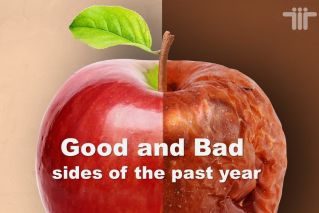
The Honey and the Sting – The Good and the Bad in 5776
The end of one year and the beginning of a new one is a good opportunity for reflection and self-examination. Ahead of Rosh Hashanah, the Association for Civil Rights in Israel is presenting five good things and five bad things that happened this year for human rights in Israel and the Occupied Territories. From the rise in housing costs and home demolitions in the Territories, to the “NGO Law,” to the cancellation of private medical services and important precedents regarding the struggle against racism.
Five Good Things
 The Committee to Eradicate Racism Against Ethiopian Israelis
In early August 2016, the Ministry of Justice led Palmor Committee published its recommendations on how to eradicate racism against members of the Ethiopian-Israeli community. ACRI sees the very appointment of the committee with great symbolic importance. The report’s authors write that recognition of racism and the need to cope with it is the most critical step towards its eventual eradication. Within the crisis of trust that sparked protests by the Ethiopian community in recent months, the authors of the report note that the Prime Minister’s decision to establish a committee was “a ray of hope for change; hope that the message of zero tolerance for racism will penetrate and change our reality.”
While the report includes important recommendations, the real test is how they are implemented, since governments are notorious for producing committee reports that end up shelved and forgotten. ACRI views the fact that the government has adopted most of the recommendations as encouraging, but waits to see if and how they are implemented and funded.
Alongside implementation, it is important to remember that racism cannot be eradicated against a single, isolated group – but rather a more holistic approach is required. Combatting racism demands a worldview that acknowledges that racism is a phenomenon that affects a wide range of groups in our society, and therefore, any campaign against racism that focuses on only one victimized group is likely to fail. This approach does not tackle racist thinking as a whole; it only divides people into hierarchies and sees the “other” as inferior. A focus on eradicating racism against one group may in fact have the reverse effect and perpetuate the treatment of that group as the ‘other.’ It may also imply that racism “from within our People” is unacceptable while racism against “outsiders” is legitimate. Combatting racism against Ethiopian Israelis must therefore be part of a comprehensive plan that opposes all forms of racism in Israel. This requires a deep shift in perception and a working assumption that sees every person as a human being with equal rights.
Private medical services: cancellations in Ashdod and reductions in Jerusalem
Four years ago, ACRI, Physicians for Human Rights-Israel and the Adva Center filed a petition against the plan to allow Assuta Hospital to provide private medical services in a new hospital in Ashdod. On that occasion we were unsuccessful, but this year it appears that a long-standing campaign by activists, organizations, experts and journalists has finally yielded fruit: The Ministry of Health and Ministry of Finance have signed an agreement with Assuta that it will not provide private medical services in the hospital. Private medical services during in morning hours at Hadassah and Shaare Zedek hospitals have also been terminated.
The ongoing campaign, which has had a ‘snowball effect’ against private medical services, intensified with the conclusions of the Yael German Committee. Ethical, economic and legal arguments against private medicine have now permeated the public discourse. At their core, these arguments claim that private medical services create an unfair advantage for those with the means to pay for treatment at the expense of those who do not.
The reduction of private medical services is a critical step averting discrimination between patients on the basis of their ability to pay, since this damages the right to equal access to healthcare, and the right to live in dignity. Privatization of medical services in Israel has widened social gaps and damaged the public health system and ACRI hopes that this first step will be followed by the subsequent necessary steps to clearly distinguish between the public and private health systems, in order to strengthen and restore trust in the public health system.
The Five-Year Plan for the Arab Sector
In December 2015, the Israeli government adopted Resolution 922, setting into motion a five-year plan for the economic integration of the Arab minority in Israel. This is a comprehensive, detailed plan that includes the allocation of significant funds for housing, education, welfare, industry and planning, health and more. This government decision is an important precedent, especially when considered against the backdrop of decades of budgetary discrimination against the Arab minority.
In a recently published government report, the State admitted for the first time that it has discriminated against the Arab minority when it comes to budgetary allocations.
There are, however, several questions concerning the proposed plan, and it is still unclear how committed the government really is to its implementation. The suggested sums are not enough to put an end to discrimination, and it is unclear whether the intention is to allocate additional budgets or to re-direct existing budgets (already allocated to the Arab population). The plan does not address some of the bigger problems, such as the shortage of classrooms and teaching hours.
The government is promoting an additional initiative to increase law enforcement of planning and construction violations in Arab towns, and is conditioning compliance as a prerequisite to receive Resolution 922 funds. This condition damages the rights of Arab citizens to equality and disregards the planning hurdles that have been in place for years and have largely contributed to the phenomenon of illegal construction.
If the government is serious about turning over a new leaf in relation to the Arab population, then words must be backed up by actions: The relevant sections of the budget for the five-year plan must be integrated into the State budget, without any preconditions. There are many more steps the government should take to foster absolute and genuine equality between Arabs and Jews, among them investing funds into the education system, solving the housing crisis in Arab towns and putting an end to discriminatory planning policies against the Arab Bedouin communities in the Negev.
Subsistence Benefits
Over the past year, the general Israeli public benefited from increases in some subsistence benefits. Towards the end of 2015, child benefits increased slightly, and the government has begun transferring NIS 50 every month into a savings account for children under 18. Income support allowances increased for those who reach retirement age and receive supplements by virtue of their status as Shoah survivors or dependent pensioners. Nursing care benefits increased by hundreds of shekels a month (for those who receive it in payments and not as services).
ACRI views these increases as welcome and positive steps, especially in light of the high rates of poverty in Israel in general, and among children and the elderly in particular. However, ACRI is concerned that increases in subsistence benefits are made arbitrarily, without a thorough examination of how these benefits correspond with what is needed in order to live in dignity. As a result, the benefit amounts are still low and beneficiaries are prevented from living in dignity.
ACRI encourages the government of Israel to employ the help of experts to determine the basket of public health services and determine an index for living in dignity. The government should also ensure that a mechanism is in place for updating the benefits accordingly. This will guarantee that any changes in the level of benefits not be made arbitrarily or in relation to political factors, and that the benefits system constitutes a genuine safety net that guarantees dignified living.
Precedents in the Campaign against Discrimination and Racism
Racism and discrimination in Israel are not new. The chants during soccer games; the screening of people of a certain origin or complexion who are considered “unwanted” in clubs; segregation at pools, country clubs and maternity wards; discriminatory practices in the job market, and more. Discrimination affects Arabs, Ethiopians, Mizrahim, ultra-Orthodox communities, women, the LGBTQ community and people with disabilities. Discrimination is often veiled and it is hard to prove it or fight it.
ACRI notes a number of precedents this year that may point to a change in direction and commends efforts by the authorities to assume responsibility for the struggle against discrimination and racism and take a more active role. For example, the police raided clubs and other recreational venues that were suspected of engaging in routine screenings, detaining 25 suspects for questioning. The police also took action against violent and racist soccer fans associated with the La Familia group. An Israeli court sentenced a soccer fan to prison for chanting racist epithets against an Arab player. The Israel Lands Authority fined a construction company for the first time ever because it published a video that was offensive to Mizrahim. These steps convey the crucial message that discrimination and racism are not a private individual matter but rather a public issue that the government must address, and that eradicating discrimination is a social value the government must uphold.
Five Bad Things
The Wave of Violence 
The past year cannot be summarized without addressing the wave of violence known as the “individual intifada”. It is not the first wave, and unfortunately, it is very likely not the last. The reality of ongoing occupation and oppression, a long-standing conflict with varying degrees of intensity and much incitement from both sides turn violent incidents of this kind into a routine. The intensity of the violence has changed over the course of the year – with periods of more and less violence – but throughout the year there continued to be extremely violent incidents in both Israel and the West Bank that left dozens dead and hundreds injured. These incidents violate the basic right to life and personal safety, have sowed fear in the public and undermined people’s ability to conduct a daily routine, leaving families bereaved and communities heartbroken.
During this difficult period, the policy of the authorities – whether through declarations or actions – has often tended towards extreme measures, unnecessary damage to rights and liberties, and the excessive use of force. For example, senior government officials called on the public to carry arms and shoot to kill in cases of violent attacks – in effect giving free license to violate the rules of engagement. As a result, in many cases, suspects were shot dead even though they did not present a direct threat. In addition, broad and protracted restrictions on movement were implemented in the West Bank and East Jerusalem that infringed on freedom of movement without justification; the Knesset passed a new law that allows minors between the ages of 12-14 to receive prison sentences; and administrative detention orders were widely used, as well as restraining orders against Palestinians and Israelis, preventing suspects of their most basic right to know what they are being charged with, so that they may form a defense.
Shrinking Democratic Space
Many steps that are detrimental to Israeli democracy were taken over the last year, and ACRI struggles to decide which was the most significant. It could be the banning of books, or the Culture Minister’s “Loyalty to Culture” Bill or the declaration against performing in settlements. Maybe the “NGO law” that marks out non-profit organizations that have agendas that differ from the mainstream; or the “Expulsion Law” that seeks to dismiss members of Knesset for political reasons, and will specifically target Arab politicians. Or the “moles” campaign, or the attacks on Breaking the Silence?
The trends that characterized the last few years are not only still relevant but have increased this year, reaching new levels. The political majority continues to harm basic rights while undermining the basic principles of democracy, like respect for authorities or averting the tyranny of the majority. Knesset members promoted bills designed to silence criticism, to delegitimize political rivals, minorities and human rights groups, and to stifle those whose positions or activities are outside the consensus. The Culture Minister and other senior members of the Ministry of Education have continued to promote decisions that violate the freedom of political expression in the arts.
Even if all of these initiatives and bills do not become a reality, or even if some of them are softened, their cumulative damage is immense. Stifling criticism and inciting against institutions, organizations and sectors of society, has an impact on the entire country and fans the flame of hatred. The victims become condemned and mistreated as enemies. The shift in discourse and legislative changes have amounted this year to significant violations of the civil and political rights of minorities, causing grave damage to the Arab minority, to the Supreme Court, the State Attorney, human rights groups, the media, academia, intellectuals and artists. They also generated intimidation, silence and self-censorship (“a cooling effect”) in Israeli society. Instead of being a society that tries to address and resolve its problems, we are turning into a society in which it is harder and harder to talk openly.
Record-Breaking Housing Prices
This year set new records for housing prices in Israel, and the dream of owning a home became farther than ever from reality for many people. Even the “Fair Rent Bill,” which could have helped those who cannot purchase an apartment to rent for a reasonable price long-term, is being advanced through a reduced and watered-down version that does not provide sufficient protection for renters.
The solution to the housing crisis is not just accelerating planning processes and increasing the supply, and certainly not by increasing the supply of large and expensive apartments. The government could fulfill its obligation to guarantee affordable housing for everyone in many ways. For example: integrating social considerations into the planning process; trying to achieve social diversity and providing a selection of apartments with a wide variety of sizes and prices in every neighborhood; allocating a certain percentage of every housing project for affordable, subsidized housing; encouraging projects with long-term rental apartments, and more.
Spike in Home Demolitions in the West Bank and East Jerusalem
This year, which marks the start of the 50th year of the Occupation, was characterised by water shortages, a rise in the number of administrative detainees, restrictions on movement and more. What stood out the most is the spike in home demolitions in the West Bank and East Jerusalem. According to data published by B’Tselem, the number of residential structures demolished in 2016 is the highest since 2006, when the organization began collecting data on this topic.
These home demolitions are carried out under the pretence of “construction without permit,” which is part of a larger planning policy regarding the Palestinians who live in Area C, under Israel’s full civilian and security control. This policy is manifested, among other things, through the prevention of physical planning of Palestinian villages. Without organized master plans, there is no way to issue building permits. This leaves people with no choice but to build without permits – which leads to home demolitions. Israel’s planning policy in the Palestinian Territories under its exclusive control also includes a declaration of territories as “State land”; the closing off of territories classified as military zones and nature reserves; barring the connection of villages to water, destroying water wells and seizing water trackers; and more. These tactics preclude options for construction and development of Palestinian villages, making life much harder for the residents and displacing them from the area. This destructive planning policy is maybe most evident in Susya, where residents have been confronting the threat of expulsion for years, and have already suffered home demolitions in recent months.
Treatment of the LGBTQ Community
It was sad to discover this year that even after the horrendous murder of Shira Banki during the Jerusalem Pride Parade in 2015, incitement against the LGBTQ community continues unabated. Ahead of this year’s Jerusalem Pride Parade, in particular, there were increasing voices trying to infringe on the rights of the LGBTQ community to live their lives freely. Alongside harmful positions expressed by rabbis, there were also increasing reports this year of violent incidents, harm and humiliation of the LGBTQ community in the public sphere. The High Court also disappointed when it chose not to protect the freedom of expression of the community and the rights of LGBTQ citizens to equality and dignity, in its decision to reject ACRI’s petition regarding the Beer Sheva Pride Parade.
ACRI was encouraged by condemnations of harmful comments by public representatives, and the fact that 25,000 people marched in this year’s Jerusalem Pride Parade, the largest the city has ever seen. Many who attended are not part of the LGBTQ community but did so in solidarity and support. Unfortunately though, this year we were once again witnesses to the fact that the road to full equality and dignity for the LGBTQ community in Israel is still a long one.


